
Shredding & Crushing
Single Shaft vs Double Shaft Shredders: How to Choose
July 18, 2026 · 5 min read
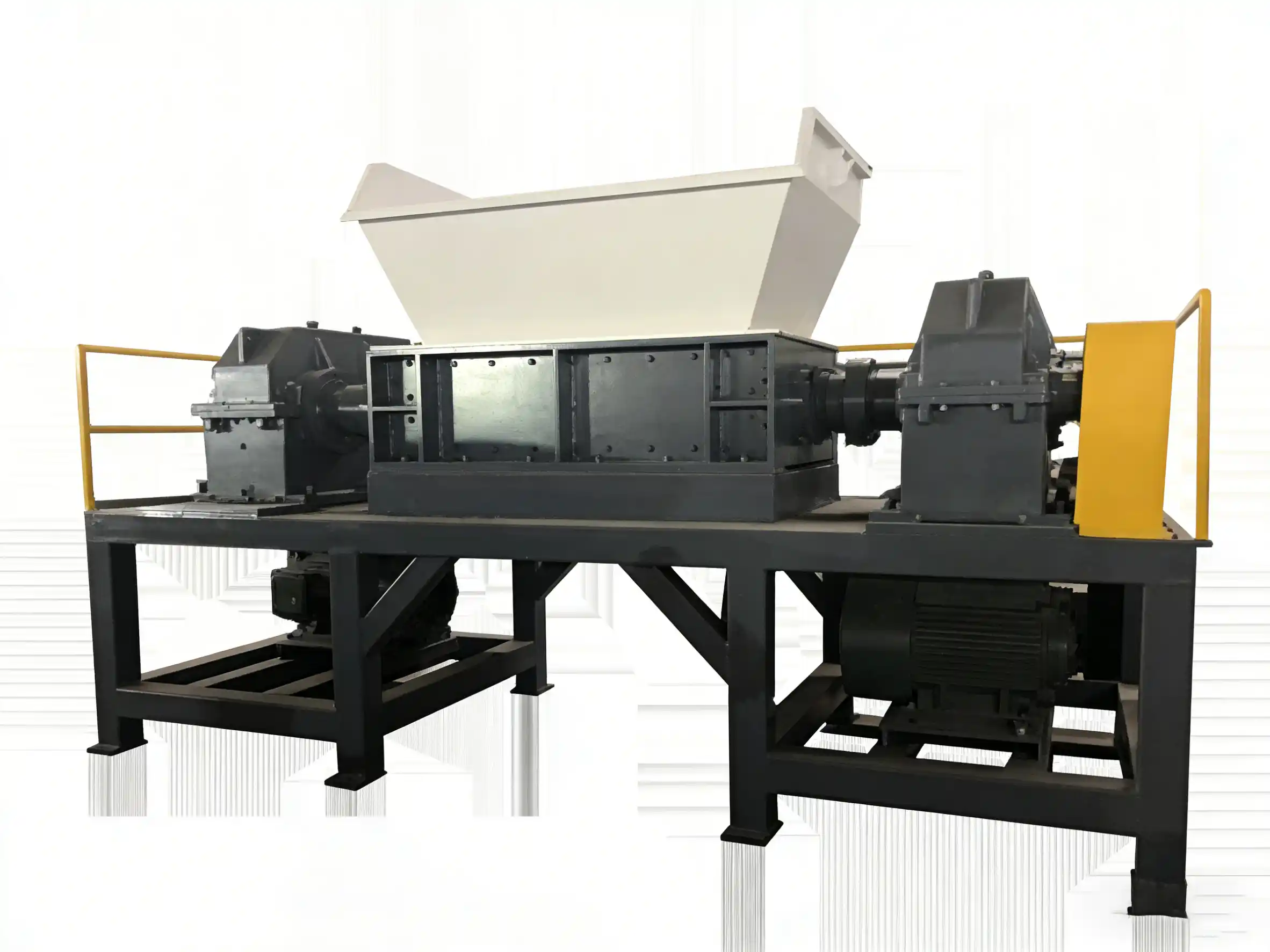
Both single shaft and double shaft shredders reduce plastic waste, but they are built for different jobs. Choosing the wrong one means feeding problems, poor output size and premature wear. Here is how to match the shredder to your material and the stage of your line.
Single shaft shredders
A single shaft shredder uses one rotating rotor with self-acting knives cutting against stationary counter knives, at low speed (60–85 RPM) and high torque. A screen mesh controls the output size, so the flake is uniform. It is the standard for film recycling because the hydraulic pusher keeps film moving and prevents wrap-around. It is also quieter, produces less dust and is easier to clean — ideal for washing lines and pelletizing where consistent particle size matters.
Double shaft shredders
A double shaft shredder uses two counter-rotating shafts with interlocking blades at very low speed (15–30 RPM) and extremely high torque. It has no screen, so output is coarser and more irregular. It excels at bulky, heavy and mixed items — pallets, drums, IBCs, large rigid parts — and tolerates contamination well. It is best used as the primary reduction stage before secondary granulation.
The film vs rigid trade-off
For plastic film specifically, a single shaft shredder is the industry standard. The screen-based output control ensures every flake meets the size specification of downstream equipment. Double shaft units spend more time cross-cutting film, which wraps around the shafts and packs between the knives; a single shaft unit with a hydraulic pusher keeps film flowing steadily.
How to decide
Choose a single shaft shredder when you need uniform particle size for washing, granulating or pelletizing, or when your feed is film, bags and softer plastics. Choose a double shaft shredder when you process bulky rigid items, mixed waste or contaminated streams and only need coarse primary reduction. Many operations run both: a double shaft shredder for primary reduction, then a single shaft unit for controlled sizing.
Check references — ensure the supplier has genuine film recycling plants in operation, not just rigid plastic references. Film needs a different feeding strategy to compensate for low bulk density and bridging.