
Washing Lines
PP Woven Bag Washing Lines: Recycling Cement Sacks, FIBC and Raffia
August 5, 2026 · 6 min read
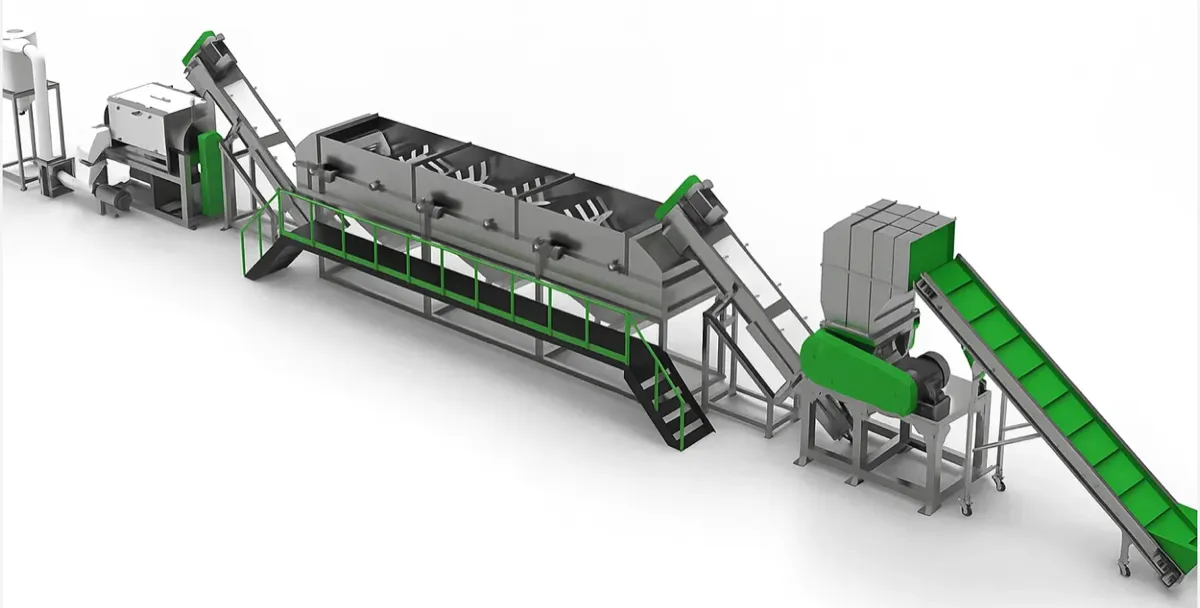
Used polypropylene woven bags — rice sacks, cement bags, fertilizer packages and industrial FIBC containers — are a steady, high-volume source of PP. But they arrive dirty: cement dust trapped between the PP tape yarns, fertilizer residues, labels and glue. A woven bag washing line removes all of it in one continuous process, producing clean PP flakes or pellets for reuse.
Why woven bags need their own approach
Woven polypropylene has a dense structure that traps fine contaminants like cement and fertilizer powder. Cold water alone cannot remove them. A dedicated line uses crushing to open the fabric, friction washing to scrub the surfaces, sink-float separation for density, and — for heavily contaminated feed — hot washing at 60–80°C to dissolve calcium-based cement and water-soluble chemicals.
The nine-step process
Bale breaking and conveyor feeding lead into shredding or crushing to 30–80 mm pieces. A pre-wash tank and label remover handle loose dirt and paper labels, then high-speed friction washing strips surface contamination. Sink-float separation removes heavy materials, and a secondary friction wash handles the most stubborn soil. Centrifugal dewatering and hot-air drying bring moisture down, and an optional pelletizing line converts the flakes into finished PP pellets.
Feedstock matters
Cement bags are the most contaminated — they need hot washing and dual friction stages. FIBC jumbo bags are usually cleaner and are best handled by a twin-shaft shredder for the thick PP tape. Rice and grain bags are the cleanest source and often justify a smaller, colder line. Mixed bales containing PE film can be co-processed by adjusting the operating parameters.
Output quality
On a properly configured line, output moisture is below 5% after squeezing and down to 1.5% after thermal drying, with flake purity above 95% from FIBC and cement bag feedstock. With pelletizing, the pellets suit injection molding, tape extrusion and most PP applications.
Hot washing is the deciding factor for cement and chemical bags. A cold-wash line cannot remove the fine cement dust trapped in woven fabric — make sure your configuration includes it if that is your feedstock.