
Washing Lines
Plastic Film Washing Lines: From Contaminated Bales to Clean Flakes
August 8, 2026 · 7 min read
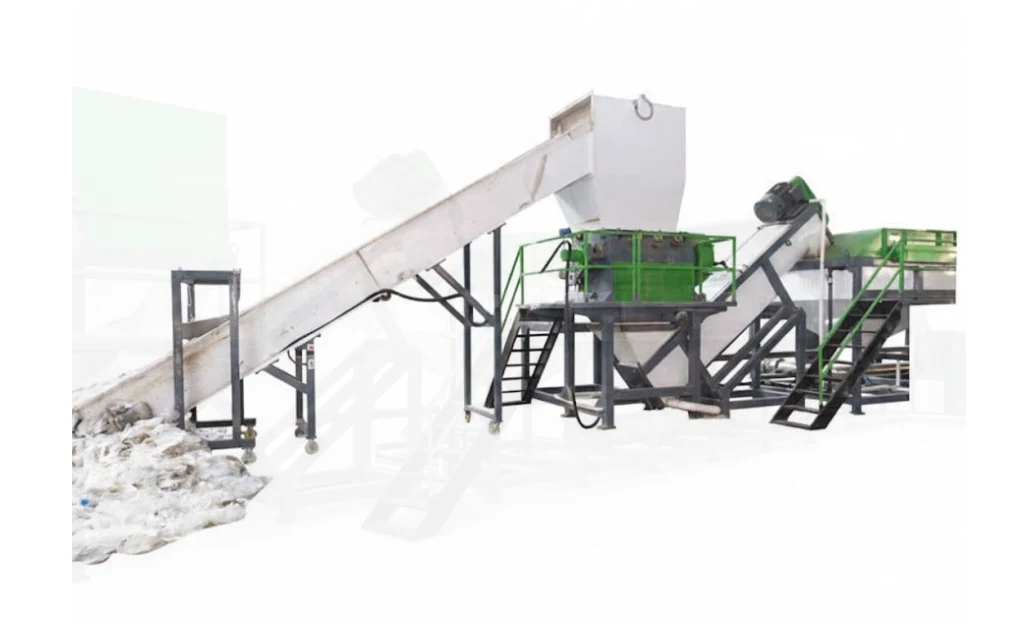
Film recycling is different from rigid plastic recycling. Film is light, it bridges and wraps around machinery, and it arrives with soil, labels, glue and ink embedded in its surfaces. A film washing line is built to handle exactly that — turning contaminated agricultural film, packaging film and post-consumer film into clean, pelletizer-ready flakes.
Why a dedicated line?
PP and PE films both weigh less than 1.0 g/cm³, so they float in water. That single fact drives the design: a float tank separates the film from sand, stones, glass and metal while friction washing strips the surface contamination that buoyancy alone cannot remove. Standard crushers and washing tanks built for rigid plastics are not suited to thin, flexible film.
The nine-stage process
A complete line follows nine stages: bale feeding, shredding, crushing, floating washing, friction washing, fine washing, squeezing, thermal drying, and packaging or pelletizing. Each stage targets a different contaminant — from heavy stones in the float tank to printing ink in the friction washer and residual moisture in the thermal dryer.
Floating before friction
The float tank is deliberately placed before the friction washers. Removing large, heavy foreign materials first prevents severe abrasion of the high-speed friction washer rotors, extending their life and cutting maintenance. Many competing designs skip the floating stage and pay for it with faster rotor wear.
Dewatering and drying
After washing, a screw-press squeezer mechanically removes most of the water, bringing moisture down to roughly 15–20%. A hot-air dryer then reduces it to about 3–5% — the range most pelletizing lines need for clean extrusion. Squeezing before thermal drying is far more energy-efficient than drying alone.
What the line can process
The same line handles LDPE stretch wrap, LLDPE agricultural film, HDPE carrier bags, PP woven bags and mixed post-consumer film. PET and PVC film must be kept separate: PET sinks rather than floats, and PVC releases chlorine compounds that damage extrusion equipment.
Capacity is measured on clean output, not bale feed. If your agricultural film bales are 30–40% soil, a 1,000 kg/h line may deliver only 600–700 kg/h of washed flakes — size accordingly.