
Pelletizing Lines
PET Pelletizing Machines: How IV Preservation Affects Pellet Quality
July 30, 2026 · 8 min read
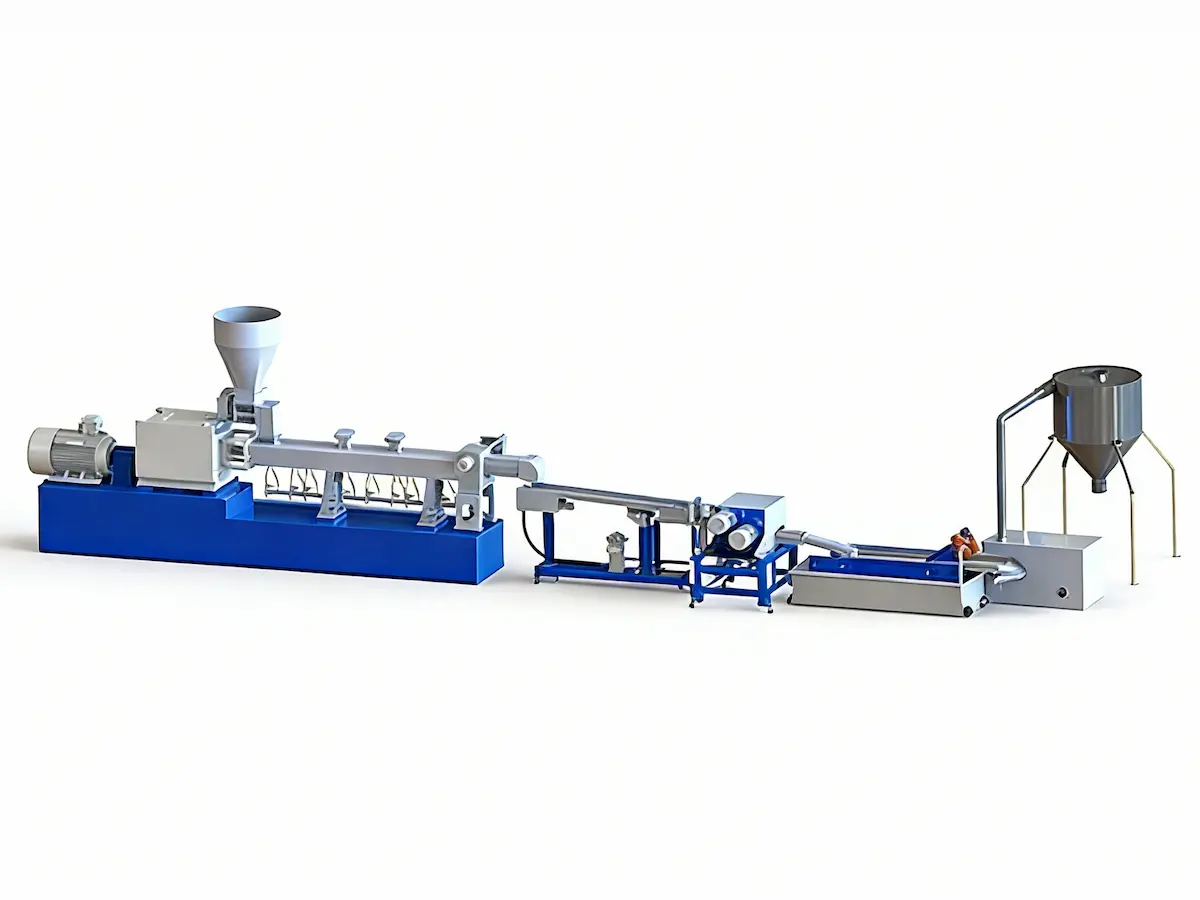
A PET pelletizing machine takes washed PET flakes and converts them into the pellets that feed injection molding, sheet extrusion, fiber spinning and strap production. Unlike a generic polyolefin pelletizer, a PET line is built around one overriding goal: preserving intrinsic viscosity (IV).
What is IV and why does it matter?
Intrinsic viscosity is used to characterize PET molecular weight. Moisture, temperature and residence time influence degradation during melting. The acceptable IV range depends on the intended application; compare tested incoming flakes and finished pellets rather than assuming a universal retention guarantee.
The moisture problem
PET absorbs moisture, which can cause hydrolysis during extrusion. Specify and measure feed moisture, then select drying and degassing for the extrusion route. Surface-dry flakes are not necessarily ready for melt processing.
Drying and crystallizing
Mechanical dewatering removes free water. Additional drying and, where required, crystallization prepare the material for extrusion. Confirm temperatures, residence time and final moisture through the selected equipment specification and material trials.
Vacuum degassing
Vacuum degassing removes moisture and volatile compounds from the melt. Performance depends on the screw design, venting area, vacuum system and feed condition. It supports pellet quality but does not by itself demonstrate food-contact suitability.
Filtration and cutting
Melt filtration removes solid contamination according to the selected filter rating. Choose screen-changing arrangements around contamination and pressure stability. Strand or other cutting systems are selected for material behavior and the required pellet specification, not capacity alone.
Confirm the intended end use
A pelletizing line alone is not evidence of food-contact approval. If food-contact reuse is intended, obtain a separately validated recycling process, appropriate testing and confirmation of the requirements in the destination market.
For a proposal, provide flake samples, moisture and IV measurements, target capacity and the final application. Agree on measurable acceptance criteria before ordering.