
Washing Lines
What Is a PET Bottle Washing Line and How Does It Work?
August 12, 2026 · 6 min read
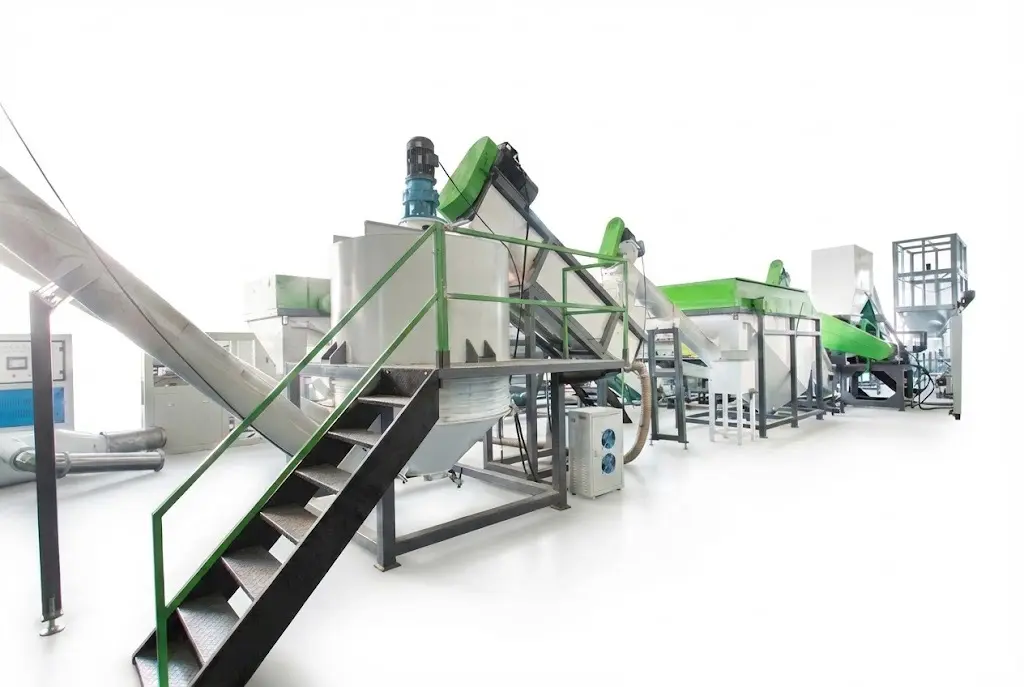
A PET bottle washing line is a complete recycling system that converts post-consumer PET bottles into clean PET flakes. Those flakes are the raw material for fiber, sheet, strapping and downstream rPET applications — and the quality of the flakes determines the value of everything that follows.
The process at a glance
A typical line moves through eight stages: bale opening and feeding, trommel and manual sorting, label removal, wet crushing, hot and friction washing, float-sink separation, dewatering and hot-air drying, and finally cyclone storage. Each stage removes a specific contaminant so the flakes meet a tight purity target.
Bale opening and sorting
Compacted bottle bales are opened and metered into the line at a stable rate. A trommel screen removes sand, stones, loose labels and visible non-PET contamination before crushing, so the rest of the line works on a cleaner feed. A label remover then strips PVC/PP labels from the bottles before they reach the crusher.
Wet crushing
Bottles are crushed into a controlled flake size while water is injected at cutting time. The water limits heat build-up that could degrade the PET and carries away loose dirt. Getting the flake size right matters: too large and the washing stages struggle; too small and you create fines that clog downstream screens.
Hot washing vs cold washing
Cold washing can be enough for low contamination and lower-grade output. Hot washing — typically a heated tank with washing chemistry — is recommended when glue, oil and labels are heavy, or when the flakes must meet a higher quality grade. Most serious PET recyclers run hot washing for fiber, sheet and bottle-to-bottle feedstock.
Float-sink separation
In a float-sink tank, PET flakes sink while PP/PE caps and labels float and are skimmed off. This density-based separation is one of the most energy-efficient steps in the line and is essential for removing the non-PET fraction from mixed bottle streams.
Output quality
On a properly configured line, reference targets include moisture below 0.9%, label below 20 ppm, PVC below 50 ppm, PP/PE below 20 ppm and total impurity below 100 ppm. Actual values depend on input bottle quality, hot wash configuration, water treatment and operation.
Before buying a line, share your bottle source, contamination level, target kg/h output and final flake use. The line should be configured around your material — not the other way around.